
TSR20 is pressed into bales, usually of 35 kg, wrapped in thin polyethylene film and either loaded loose or stacked on pallets. A 20ft container typically carries about 20 tonnes net. Because rubber is dense, the limit is weight, not space, so a 40ft container rarely carries much more. Good loading keeps bales clean, dry and separate, and stops them sticking or deforming in transit.
This guide covers packing options, weights and what to check. For the product, see TSR20 natural rubber from Liberia.
Bale size and wrapping
| Item | Typical figure |
|---|---|
| Bale weight | 35 kg (33.33 kg is also used) |
| Bale size | About 670 × 330 × 170 mm |
| Wrapping | Polyethylene film, low melting point so it can be mixed in with the rubber |
| Marking | Grade, lot number, bale weight, producer code |
The film keeps the bales clean and stops them sticking together. Because it melts at mixing temperature, buyers do not need to remove it, provided the film specification is agreed. Ask for the film's melting point if your process is sensitive.
Loose or palletised
| Item | Loose bales | Palletised |
|---|---|---|
| Loading | Bales stacked by hand | Pallets loaded by forklift |
| Unloading | Slower, more labour | Faster, needs forklift and dock |
| Net weight per 20ft | About 20.16 tonnes (576 bales) | About 20.16 tonnes (16 pallets of 36 bales) |
| Risk | Bales can deform and stick under weight | Pallets carry weight, less deformation |
| Cost | Lower | Higher, pallets add cost and tare weight |
Pallets are usually wooden or metal crates. Wooden pallets must be heat treated and marked under ISPM 15. Metal crates are stronger and often returnable in regular trade.
Why weight, not space, sets the load
A 20ft container has around 33 cubic metres of space, but road, port and container weight limits cap the cargo. TSR20 fills only part of the space before reaching about 20 tonnes. A 40ft container has twice the space but its payload limit is only modestly higher, so for rubber it rarely makes sense. Check road weight limits in your destination country too.
Our container calculator helps you estimate bales, pallets and containers for an order.
Container preparation
Before loading, the container should be:
- Clean, dry and free of odours, with no holes or damaged floor
- Free of nails and sharp edges that can tear wrapping
- Lined with paper or plastic if agreed, to protect bales
- Fitted with desiccant bags where the voyage is long or humid
Preventing damage in transit
| Problem | Cause | Prevention |
|---|---|---|
| Sticking bales | Heat, pressure, damaged film | Pallets, intact film, not overstacking |
| Cold flow and deformation | Weight on loose bales over time | Palletising, correct stack height |
| Mould | Moisture in rubber or container | Low volatile matter, dry container, desiccants |
| Contamination | Torn wrapping, dirty container | Container inspection, careful handling |
| Short weight | Miscounts or wet bales | Surveyor count and weighing |
Inspection at loading
The surveyor checks the container, counts bales or pallets, weighs a sample, checks wrapping and labels, supervises stuffing and records the seal number. See inspection and certificates of analysis.
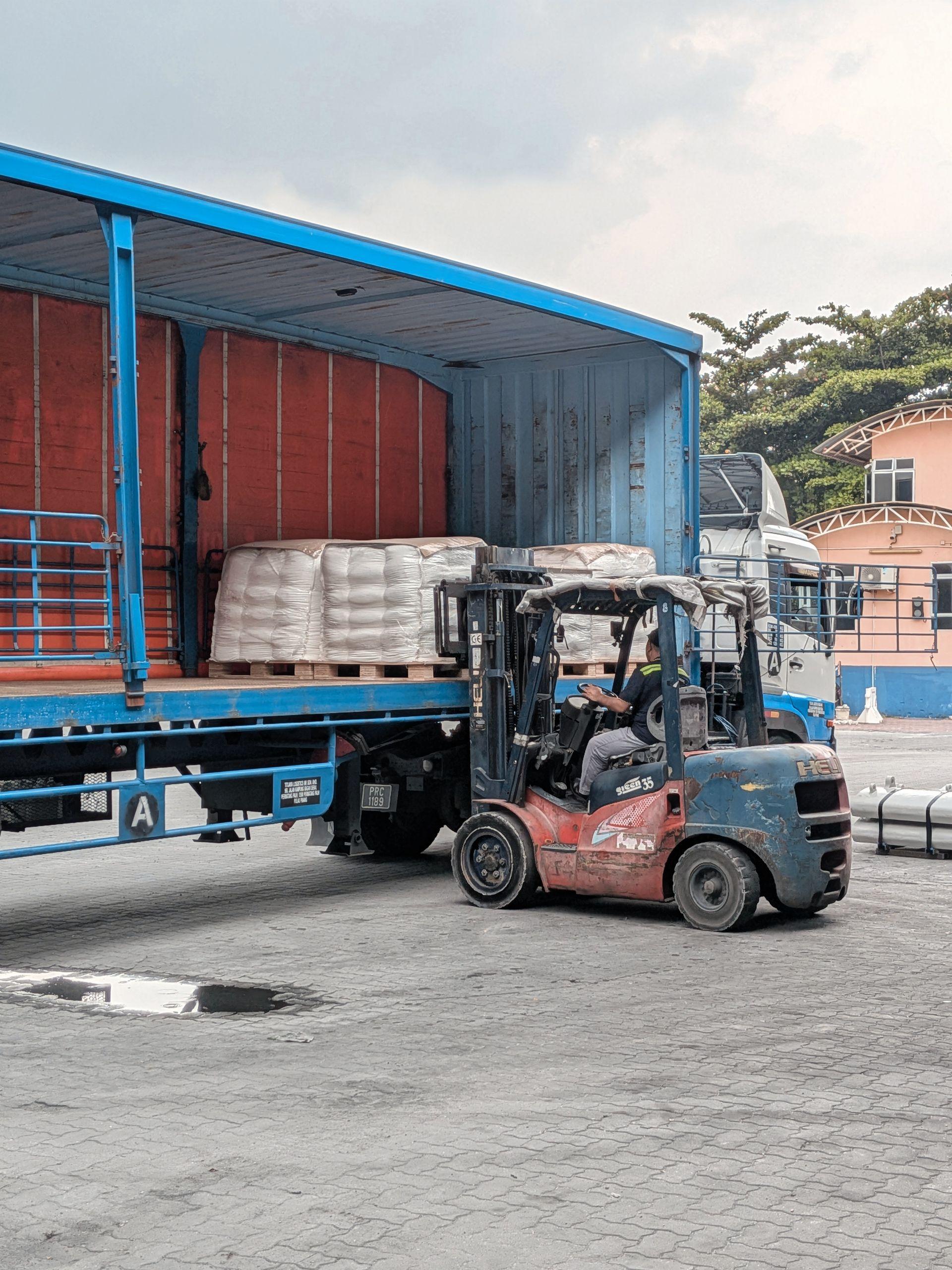
At destination
When the container arrives, check the seal number against the bill of lading before opening. Photograph the cargo on opening. Note any damage on the delivery receipt and inform the seller and insurer straight away. If bales have stuck together, separate them carefully and record their condition before use, so that any claim is backed by evidence. Our guide on how a TSR20 shipment works covers the steps before loading.