
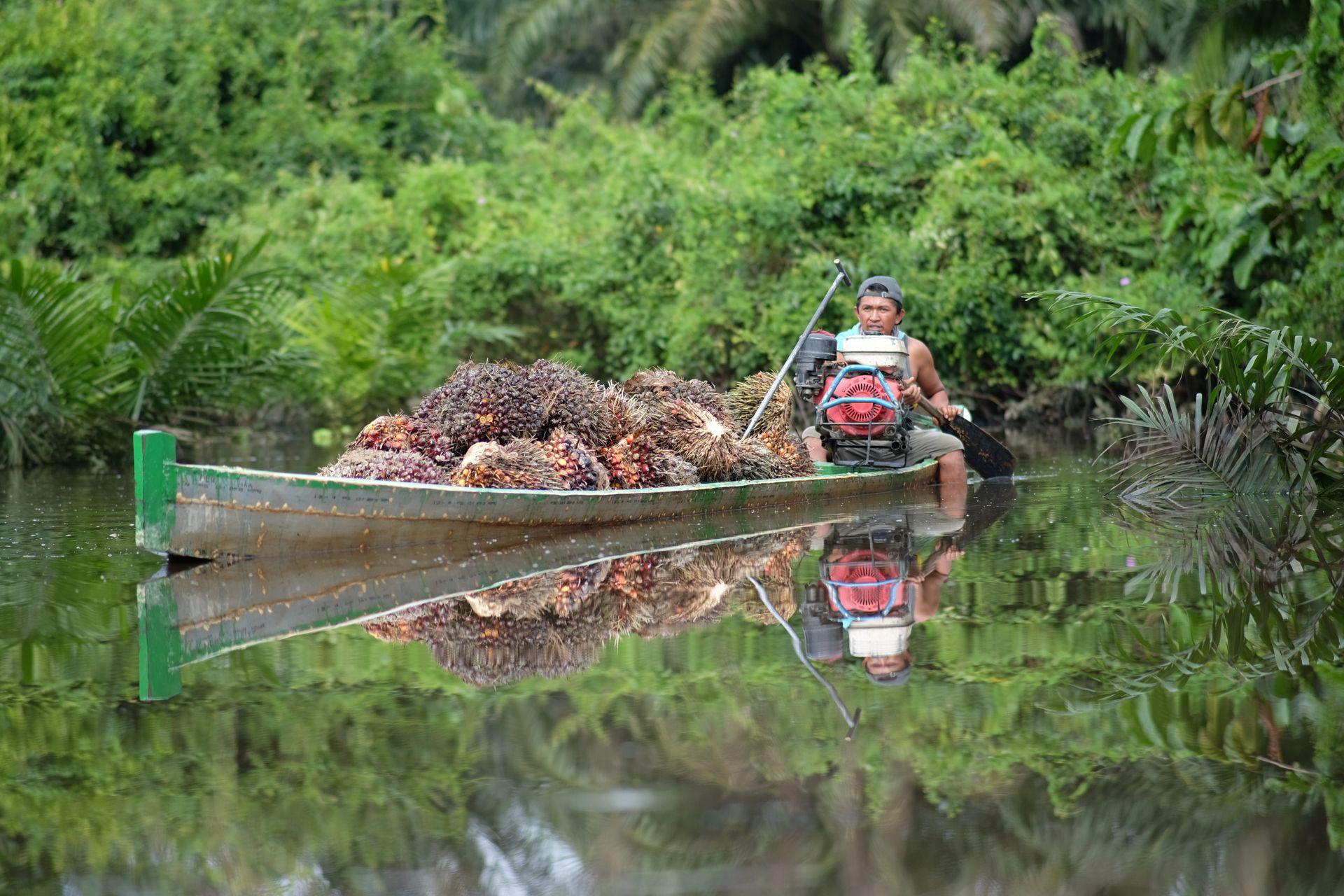
We supply crude palm oil (CPO) produced in Liberia. Each parcel is sold under our own contract and tested by an independent surveyor before loading. Orders start at 20 tonnes, parcels are usually ready to load 7 to 14 days after contract, and payment terms are flexible.
Liberian CPO is a short sailing from the main West African refining centres and closer to Europe than Southeast Asian origins. That makes it a practical source for refiners who want to diversify supply without long transit times.
What we supply
Crude palm oil is the unrefined oil pressed from the mesocarp of the oil palm fruit. It is the feedstock for refined, bleached and deodorised (RBD) palm oil, palm olein and stearin, and for oleochemical production.
We also supply palm kernel shells for use as biomass fuel. Shells are a by-product of palm kernel processing and are used in industrial boilers and power plants. Ask for availability and specifications when you request a quote.
CPO specification
Refiners buy CPO on three main parameters. Free fatty acids (FFA) drive refining losses. Moisture and impurities (M&I) affect storage and handling. The deterioration of bleachability index (DOBI) shows how easily the oil will bleach, which affects bleaching earth consumption and final colour.
| Parameter | Typical contract limit | What it tells the refiner |
|---|---|---|
| FFA (as palmitic acid) | 5.0% max | Refining loss and oil freshness |
| Moisture and impurities | 0.5% max | Storage stability and weight accuracy |
| DOBI | 2.3 min | Bleachability and colour |
| Iodine value | 50 to 55 (typical range) | Degree of unsaturation |
The binding limits are set in each contract. If you need tighter FFA or a higher DOBI, tell us when you request a quote.
Our guide to CPO quality parameters explains how each figure affects your refining cost.
Why buy Liberian CPO through a trader
Palm oil in Liberia comes from a mix of large mills and many smaller producers. Quality varies between mills and between seasons, and so does paperwork. A buyer abroad needs a seller who can put together consistent parcels, stand behind the specification and produce documents that hold up at destination.
We take that responsibility:
- Parcel consolidation. We build parcels to your volume and quality, so you contract once.
- Independent testing. Every parcel is sampled and tested by an independent surveyor before loading, and you receive the results before you pay against documents.
- Flexible payment. Letters of credit and payment after delivery are both possible.
- One contract. Quality, quantity, delivery and claims sit in one contract with us.
Refiners in Ghana and the wider region can read our notes on Liberian palm oil for West African and EU refiners.
Shipment options
| Option | Typical use | Notes |
|---|---|---|
| Flexitank in 20ft container | Parcels from one container upwards | 22 tonnes per flexitank |
| ISO tank container | Buyers who need tank discharge | Available on request |
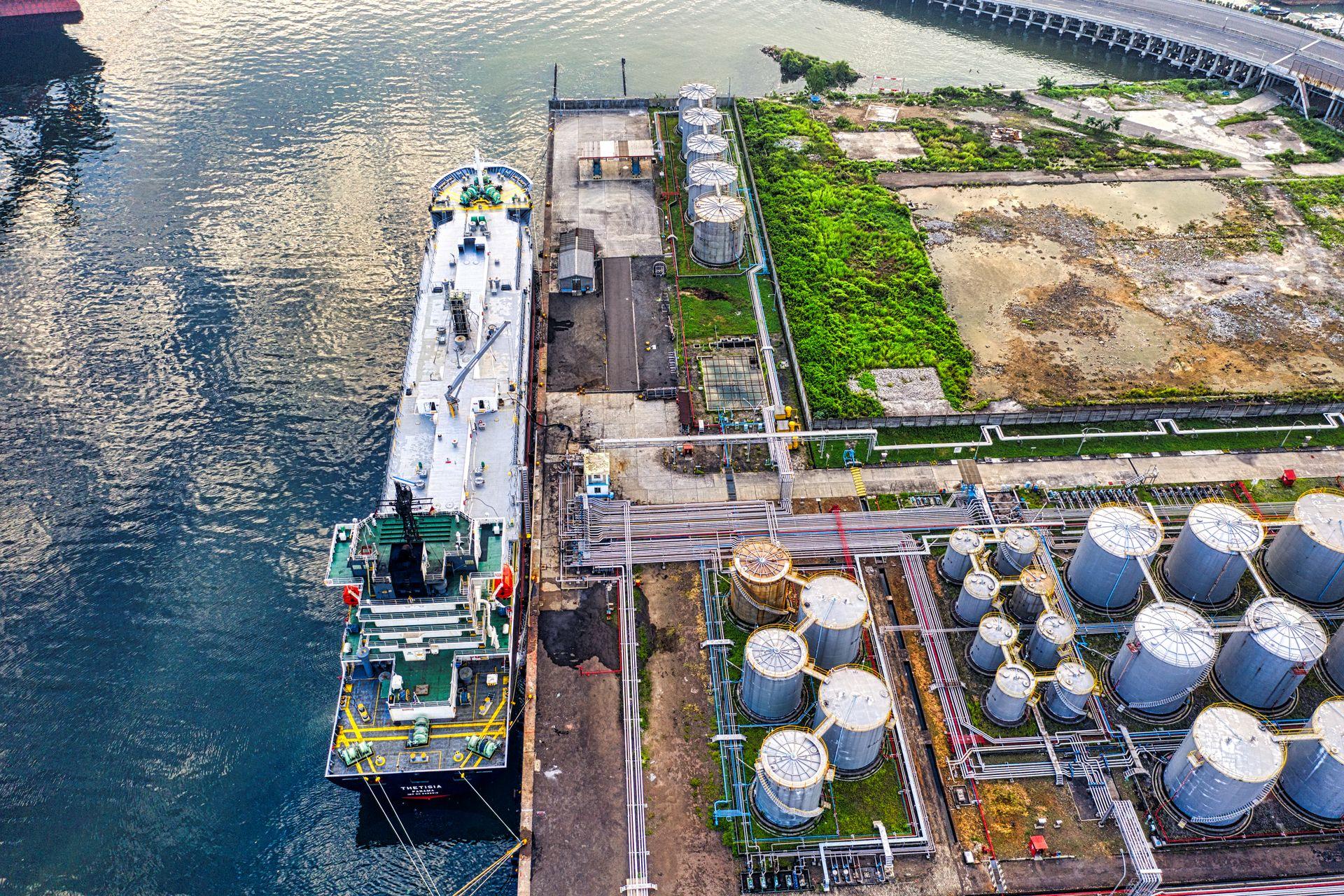
| Bulk parcel | Refiners with tank terminals | From 20 tonnes |
CPO must be kept warm enough to stay liquid for discharge but not overheated, which raises FFA. Flexitank shipments need heating pads or a heated discharge at destination. We agree the heating and discharge instructions in the contract.
The HS code for crude palm oil is 1511.10. Use our container calculator to estimate flexitanks for your order.
Quality control and documents
- Choice of surveyor. You can appoint your own surveyor, or we propose one of the independent surveyors we work with and confirm the choice with you before loading.
- Pre-loading tests. The surveyor samples the oil from storage and tests FFA, M&I and DOBI against the contract.
- Loading supervision. The surveyor supervises loading, records quantities and seals tanks or containers.
- Load port sample retention. Sealed samples are kept for reference in case of a quality dispute.
- Shipping documents. You receive the bill of lading, certificate of analysis, certificate of quantity and certificate of origin.
Read more about inspection and certificates of analysis and the export documents that come with each shipment.
EUDR: where we stand
Oil palm is one of the seven commodities covered by the EU Deforestation Regulation. For CPO placed on the EU market from 30 December 2026 by large and medium operators, the importer must file a due diligence statement showing that the oil is deforestation-free after 31 December 2020 and legally produced, with geolocation of the plots where the fruit was grown.
Our CPO is not yet EUDR compliant. We do not yet have plot-level traceability for our palm oil. We are aware of the regulation and are working on the traceability and documentation needed to supply EU buyers under it. Until then, EU buyers should discuss their EUDR requirements with us before contracting. Buyers outside the EU are not affected.
Our CPO is not RSPO certified at present.
See our EUDR status and how EUDR due diligence works for palm oil.
Commercial terms
- Minimum order: 20 tonnes
- Lead time: 7 to 14 days from contract to loading
- Payment terms: flexible, including letters of credit and payment after delivery. Contact us to discuss.
- Contract: our own sales contract, covering specification, inspection, documents, payment and claims
- Incoterms: agreed per contract, including FOB Monrovia, and CFR or CIF to your port
CPO prices are usually set with reference to the Bursa Malaysia CPO futures or a regional benchmark, adjusted for origin, quality and freight. We quote firm prices against a specific volume and shipment period.
Who buys our CPO
- Refiners in Ghana and West Africa producing cooking oil and margarine fats
- Importers and distributors supplying refiners and food manufacturers
- Importers in Asia, the Middle East and the Americas looking for an additional origin
- EU refiners and importers, subject to the EUDR status above
We ship to any port worldwide.
Refiners comparing payment options can read LC vs CAD vs TT explained.