
Our crude palm oil and natural rubber are not yet EUDR compliant. We are aware of the EU Deforestation Regulation (EUDR) and are working towards compliance: building plot-level traceability, collecting legality evidence and setting up the records an EU importer needs to file a due diligence statement. Until that work is complete, EU buyers should discuss their EUDR requirements with us before contracting. Buyers outside the EU are not affected.
What the EUDR requires
The EUDR is Regulation (EU) 2023/1115. It covers seven commodities: cattle, cocoa, coffee, oil palm, rubber, soya and wood, plus listed products made from them, such as palm kernel oil, tyres and many other rubber goods. A covered product may only be placed on the EU market or exported from it if it meets three conditions:
- Deforestation-free. It was produced on land that has not been deforested since 31 December 2020. For wood, the land must also not have been degraded.
- Legal. It was produced in line with the relevant laws of the country of production, covering land use rights, environmental protection, labour, human rights, tax and anti-corruption rules.
- Covered by a due diligence statement. The operator has carried out due diligence and filed a statement in the EU information system.
Due diligence has three steps: collect information (including plot geolocation), assess the risk that the product is not compliant, and mitigate any risk that is more than negligible before placing the product on the market.
Key dates
| Who | Date the EUDR applies |
|---|---|
| Large and medium operators and traders | 30 December 2026 |
| Micro and small operators (outside timber) | 30 June 2027 |
These dates follow the amending Regulation (EU) 2025/2650. The Commission published a simplification review in May 2026 and left the December 2026 date in place. Dates have changed more than once, so we keep a dated EUDR timeline and update it when the rules move.
What we are putting in place
To supply EU buyers under the EUDR, a supplier needs to provide the following for each shipment. These are the elements we are working towards:
| Data | What it is |
|---|---|
| Plot geolocation | GPS points for each plot, or polygons for plots over 4 hectares |
| Country and period of production | Liberia, with the harvest or collection period |
| Product description and quantity | Commodity, HS code and net weight, matched to the invoice |
| Legality evidence | Documents showing production complies with relevant Liberian law |
| Deforestation check | A check of the plots against forest cover data for 31 December 2020 |
| Chain of custody | Records linking the plots to the processing site and the shipped lot |
Today we do not yet have plot-level traceability in place. We will update this page as each part is completed.
The geolocation and traceability data guide shows what each part contains and how it maps to the fields of the due diligence statement.
What stays with the importer
The company that first places the product on the EU market is the operator. That is usually the importer. The operator remains legally responsible for the due diligence, even when the data comes from the supplier. In practice, that means:
- Checking that supplier data is complete and consistent with the shipment
- Running its own risk assessment, including the country risk level and any red flags
- Filing the due diligence statement and quoting its reference number at customs
- Keeping records for five years
Under the 2025 amendment, downstream operators and traders who buy products already covered by a statement have fewer obligations than the first operator.
Country risk and what it means for Liberia
The Commission classifies producing countries as low, standard or high risk. The classification changes how much checking authorities do: competent authorities check about 1% of operators for low risk countries, 3% for standard risk and 9% for high risk. It also affects how deep an importer's own risk assessment needs to be.
Liberia is not on the low or high risk lists, so it is treated as standard risk. Our note on EUDR country benchmarking explains what that means for importers.
Where the real risks sit in Liberian supply
Most of the risk in Liberian palm oil and rubber is not on large, mapped estates. It is in the supply that comes from many small farms, which may be sold through intermediaries before reaching a factory or mill. The risks are:
- Missing plot data. Smallholder plots are often not mapped.
- Mixing. Mapped and unverified material can be mixed at collection points.
- Land rights. Customary land tenure can make legality evidence harder to obtain.
- Recent clearing. Small plots planted after 2020 may sit on cleared forest.
These are the points our compliance work is built around: mapping the plots behind our supply, keeping mapped material separate, and documenting legality. We will only describe a shipment as EUDR compliant once the data behind it is complete.
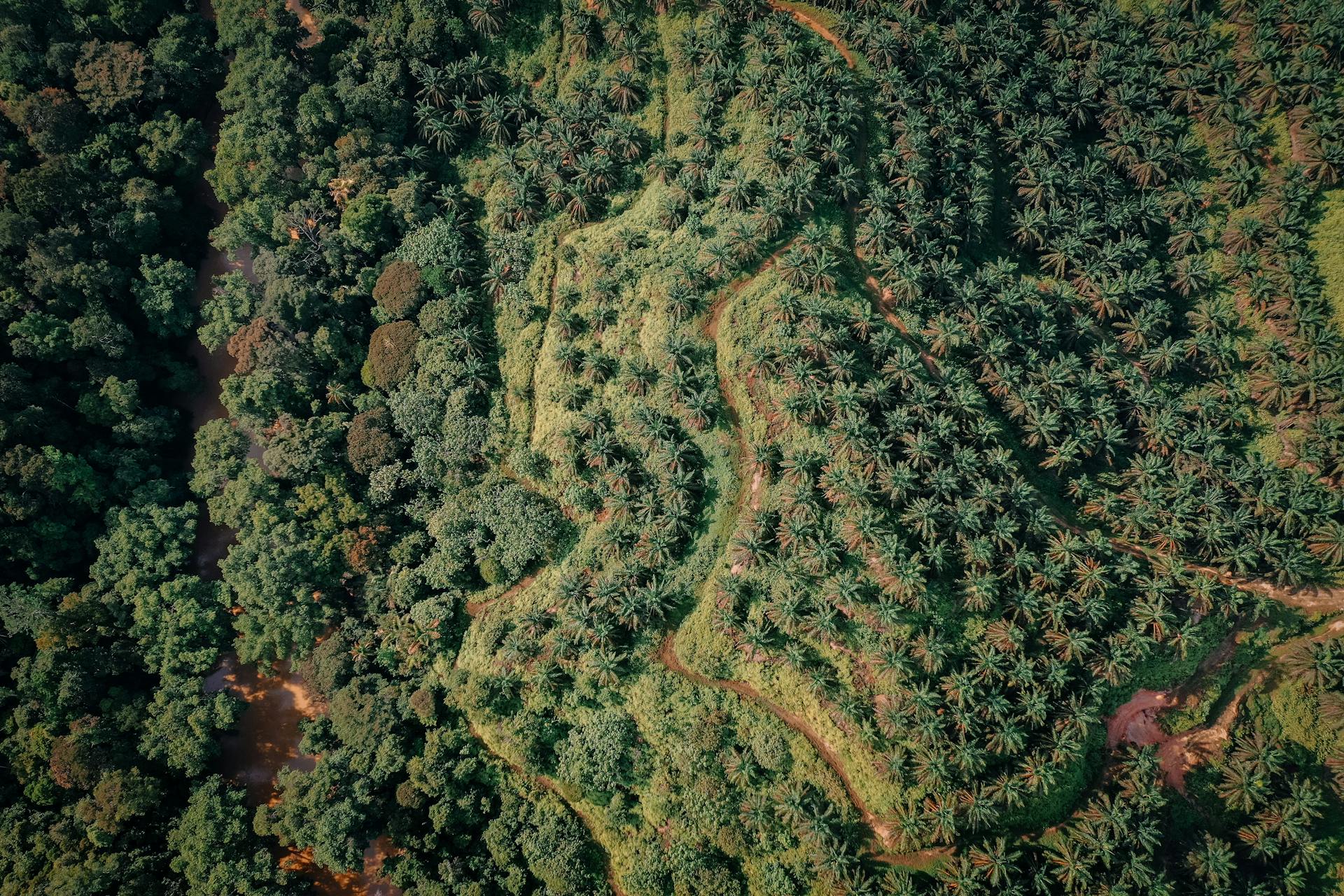
Our article on sustainability in Liberian rubber looks at the smallholder side in more depth.
Commodity-specific guides
- How EUDR due diligence works for palm oil imports, including mill and plot traceability
- How EUDR due diligence works for rubber imports, including tyres and other derived products
- EUDR buyer checklist to use with any supplier
For product details see crude palm oil and natural rubber.