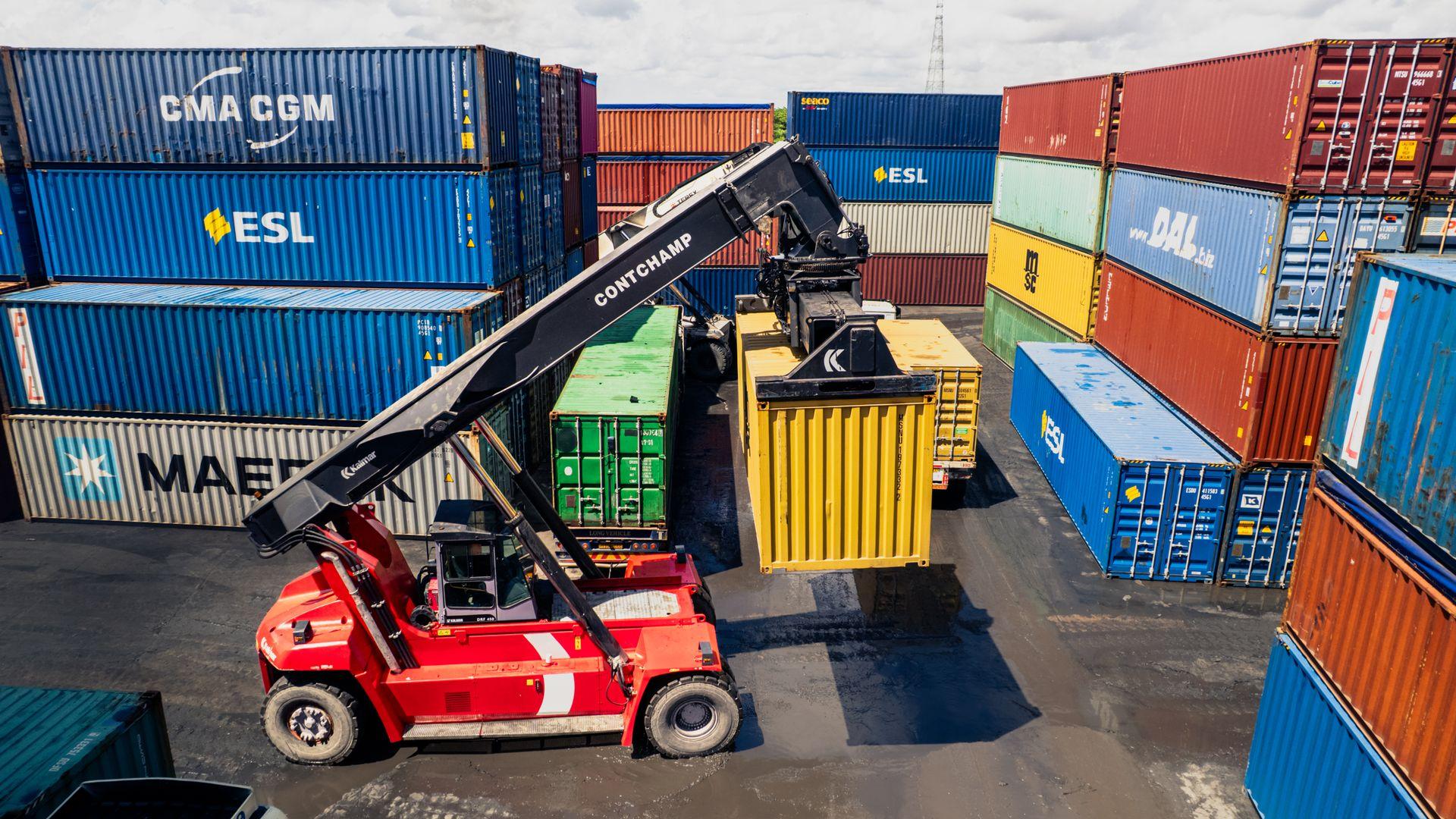
Most of Liberia's palm oil and rubber exports leave through the Freeport of Monrovia, a container port served by the major lines, usually with transhipment at a regional or Mediterranean hub. Sellers commonly quote FOB Monrovia, or CFR and CIF to the buyer's port. Cargo can be shipped to any port worldwide. Indicative transit times are around one to two weeks to Ghana, two to four weeks to North Europe and five to seven weeks to Asia, depending on the transhipment route.
This guide covers ports, Incoterms and transit planning. For product details, see crude palm oil and TSR20 natural rubber.
The Freeport of Monrovia
The Freeport is Liberia's main port and handles most containerised exports. Its container terminal is run under a concession by an international terminal operator. Palm oil in flexitanks and rubber in bales both move as containerised cargo.
Liberia has other ports, used mainly for bulk cargo and for specific operations. For most buyers of flexitank CPO and TSR20, Monrovia is the load port.
Routes and transhipment
Few services sail direct from Monrovia to the final destination. Most cargo is transhipped:
| Destination | Typical routing | Indicative transit |
|---|---|---|
| Ghana (Tema) | Regional service along the coast | 1 to 2 weeks |
| North Europe (Rotterdam, Antwerp, Hamburg) | Via a West African or Mediterranean hub | 2 to 4 weeks |
| Asia (China, Malaysia, India) | Via a West African or Mediterranean hub | 5 to 7 weeks |
| Americas, Middle East and other regions | Via a West African, Mediterranean or European hub | Quoted per route |
Times vary with schedules, port congestion and how long a container waits at the transhipment port. Build a margin into your production planning.
Incoterms for palm oil and rubber
| Incoterm | Seller arranges | Risk passes |
|---|---|---|
| FOB Monrovia | Export clearance and loading | When goods are on board at Monrovia |
| FCA Monrovia | Export clearance, delivery to carrier | When handed to the carrier |
| CFR destination | As FOB, plus ocean freight | On board at Monrovia |
| CIF destination | As CFR, plus minimum cargo insurance | On board at Monrovia |
| DAP destination | Transport to destination | At destination, not unloaded |
Under CFR and CIF the seller pays freight, but risk still passes at the load port. If the cargo is damaged at sea, the buyer claims on the insurance. Under CIF, Incoterms 2020 only requires minimum cover (Institute Cargo Clauses C). Ask for wider cover if you need it.
For containers, the ICC recommends FCA rather than FOB, because the seller hands containers to the carrier at the terminal, not over the ship's rail. In practice FOB remains common in commodity contracts.
Rubber-specific points
- Heat and humidity. Long transits in hot climates can cause bales to stick together and Mooney to rise. Dry containers and good wrapping help.
- Condensation. Temperature changes during the voyage can cause "container rain". Container liners and desiccants reduce the risk.
- Weight limits. TSR20 is dense, so containers hit road and port weight limits before they are full. See TSR20 container loading.
Palm oil-specific points
- Heating at discharge. CPO solidifies at ambient temperatures in Europe. Flexitanks need heating pads or a heated discharge.
- Flexitank approvals. Use flexitanks approved for food-grade oil if the oil is for food use, and make sure the destination terminal accepts them.
- Time. Longer transits allow more FFA rise. Shorter routes, such as to West African refiners, help.
Documents for each shipment
You will receive the bill of lading, invoice, packing list, certificate of analysis, weight or quantity certificate and certificate of origin. EU importers will also need EUDR data from their supplier; see our EUDR status. See export documents explained.
Planning a shipment
- Agree the Incoterm and the shipment period in the contract.
- For CFR and CIF, the seller books space. For FOB, the buyer nominates the line or forwarder in time.
- Allow time for inspection and loading before the vessel cut-off.
- Track the container from the bill of lading number with the shipping line.